
Contact Me Today
Gerard Dunning, Terrigal, NSW 2260, Australia
What's on your mind?
Fill out the form below and we'll get back to you.
Fill out the form below and we'll get back to you.
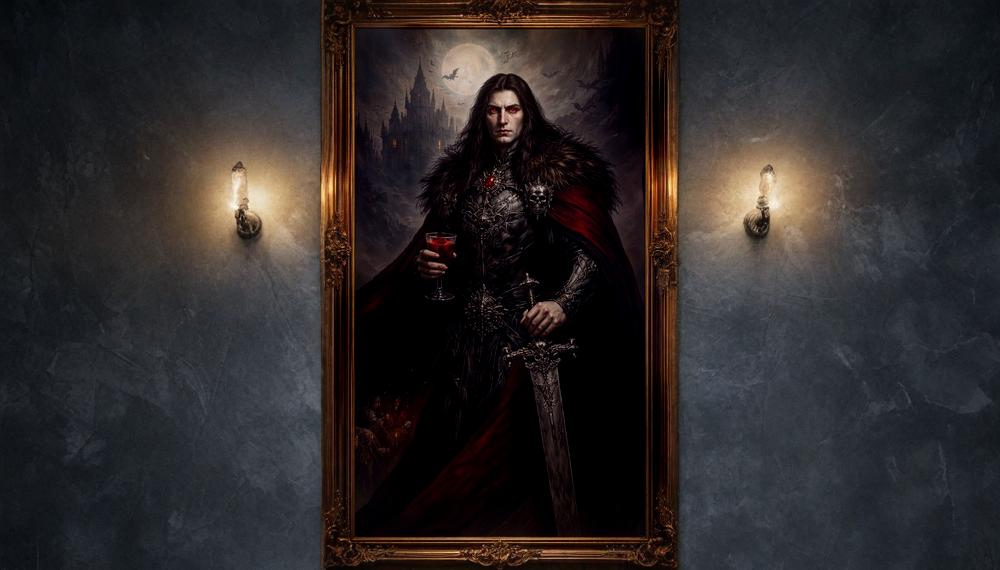
The Enquiry Into the Affairs of Lord Septimus Alaric von Gravenhurst, Twice-Blooded, Keeper of the Black Covenant
Concept & Style: Steve is a one-act comedy built around a five-movement dramatic arc that blends heightened realism with institutional absurdity.
At its centre is Lord Septimus Alaric von Gravenhurst, Twice-Blooded, Keeper of the Black Covenant "The Undying" - an ancient vampire so certain of his own continuance that bureaucracy becomes his undoing. When the systems of the modern world intrude with polite efficiency, they strip him of his wealth, his identity, and his bearings.
From the icy logic of tax auditors to the fluorescent glow of job-market booths, Steve tracks his descent from regal certainty into exhaustion and displacement. The comedy arises from the collision of stately tradition and rigid process: ancient authority confronted by HR vernacular, benefits policy, and the unforgiving logic of minimum word counts.
The play is structured in five distinct movements: exposition through audit, rising action through the maze of modern work, a climactic misunderstanding turned connection in a warm nightclub, falling action through reinvention, and a quiet denouement of acceptance. Each movement offers new textures, tone shifts, and opportunities for ensemble interplay.
Creative Tone: The comedy in Steve is incisive but affectionate. Characters are not mocked - systems are. The play captures the rhythms and frustrations of institutional life, satirising how modern processes fracture identity, even as they offer the promise of support. What begins as a comedy about befuddlement becomes a quietly human story of reinvention and community.
Production Note: Steve is designed to move fluidly between three primary environments: the vampire’s ceremonial domain, the modern labour marketplace, and the nightclub sanctuary. These spaces are suggested rather than built, allowing transitions to occur in full view of the audience. The world shifts around Septimus; he remains the fixed centre of the play.
Lighting is the principal storytelling device. Changes in colour, intensity, and focus define sub-scenes, isolate encounters, and mark emotional movement. Booths, offices, and social spaces emerge and disappear through light, creating rapid, cinematic transitions without interrupting momentum.
Septimus is almost always onstage, anchoring the action as environments and social systems process, reject, and ultimately absorb him. The design supports a performance-led approach: minimal set, precise lighting cues, and clear spatial rules that allow comedy, rhythm, and character to drive the storytelling.
Audience: Steve is aimed at theatre-goers who appreciate sharp, character-driven comedy layered with subtle absurdity. The ideal audience enjoys observational humour, dry wit, and satire of contemporary systems, yet is also receptive to dark, gothic undertones.
Septimus is never explicitly identified as a vampire; his nature is revealed gradually through mannerisms, dialogue, and visual cues - his ritualised behaviour, aristocratic language, and command of the night. The audience is invited to piece together these clues, rewarding attentiveness and imagination.
Expect viewers who delight in:
The play balances farcical exaggeration with poignancy, appealing to those who enjoy layered, performance-led storytelling where subtle visual, linguistic, and tonal cues reveal depth without exposition.
This work is licensed under the Creative Commons Attribution-NonCommercial-ShareAlike 4.0 International License.
Download "Steve" ScriptThis work is licensed under the Creative Commons Attribution-NonCommercial-ShareAlike 4.0 International License.
Please send performance details to: [email protected]
For further clarification or to request commercial use rights, contact the author directly.
By proceeding with any performance of Plays by Gerard Dunning, you agree to adhere to the terms of this license.
Thank you for visiting my website. I look forward to collaborating with you.